
Partial Dentures
-
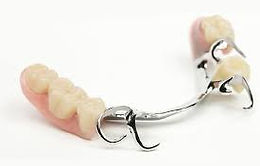
Partial dentures are recommended when some, but not all of the natural teeth remain in the upper or lower jaw.
-
In many cases additional teeth can be added to the partial denture if more natural teeth are lost or extracted. Losing another tooth does not mean you have to get a whole new denture.
-
Partial dentures are held in place by clasping around and hugging certain remaining natural teeth. Because of this, a cleaning is recommended before impressions are taken to ensure the best possible fit of the denture.
-
The clasps on a partial denture are strong, but can bend or break. Resist the urge to tighten, loosen, or reshape the clasps yourself. If you have concerns about the fit of the clasps, your Denturist can help you with them in a simple adjustment appointment.
-
Partial dentures can be fabricated in numerous ways
-
Cast Metal Partial Dentures have a metal framework as the base of the denture and the clasps are fabricated as one piece with the base. The strength of the metal base allows the denture to be made smaller and stronger than some other partial denture options.
-
Acrylic Partial Dentures have a pink acrylic base, similar to complete dentures. These types of partial dentures are available with or without metal clasps. The clasps on acrylic partial dentures are made of wrought wire and are hand bent around the teeth on the model before being embedded into the acrylic base.
-
Flipper dentures are the smallest of the partial dentures. These replace only one or two missing teeth, usually in the front. These partial dentures do not have metal clasps.
-
-
Name labels can be added to the acrylic for identification and to avoid loss or misplacement of the denture.